
What is High Blood Pressure and hypertension?
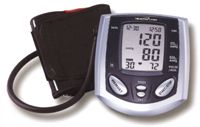 Blood pressure (BP) levels are continuously related to the risks of cardiovascular disease (CVD). The definition of hypertension or raised Blood Pressure is therefore arbitrary. Even within the normotensive range, people with lowest levels of Blood Pressure have the lowest rates of cardiovascular disease.
Because Blood pressure is characterized by large spontaneous variations, the diagnosis of hypertension should be based n multiple Blood Pressure measurements taken on several separated occasions.
Classifications and definitions of High Blood Pressure
| Category | Systolic BP (mm/Hg) | Diastolic BP (mm/Hg) |
| Optimal BP | <120 | <80 |
| Normal BP | <130 | <85 |
| High-Normal BP | 130-139 | 85-89 |
| Grade 1 Hypertension (mild) | 140-159 | 90-99 |
| Grade 2 Hypertension (moderate) | 160-179 | 100-109 |
| Grade 3 Hypertension (severe) | >180 | >110 |
When a patient's systolic and diastolic blood pressures fall into different categories, the higher category should apply.
In some patients, office (or clinic) blood pressure is persistently elevated whereas daytime BP outside clinic environment is normal. There is counting debate as to whether "isolated hypertension ("white coat hypertension") is an innocent phenomenon or whether it carries an increased burden of cardiovascular risk.
Clinical evaluation - what should be done?
Information for medical personalThe clinical and laboratory evaluation of hypertensive patient should be conducted with four aims:
- to confirm a chronic elevation of blood pressure and determine the level
- to exclude or identify secondary causes of hypertension
- to determine the presence of target organ famageand quantify its extent
- to search for other cardiovascular risk factors and clinical conditions that may influence the prognosis and treatment
- Allow the patient to sit for several minute before measuring blood pressure
- Use a cuff with a bladder that is 12-13 cm x 35 cm, with a larger bladder for arms
- Use phase 5 Korotkoff sounds (disappearance) to measure the diastolic pressure
- Measure the blood pressure in both arms at first visit
- Measure the BP in standing position in elderly subjects and diabetics patients
- Place the sphygmomanometer cuff at heart level, whether the position of the patient
Minimum routine investigations
- Clinical and family history
- Full physical examination as described in medical textbooks
- Laboratory investigations, including:
- Urinalyses for blood, protein. And glucose
- Microscopic examination of urine
- Blood chemistry of potassium, creatinine, fasting glucose, and total cholesterol
- Electrocardiography
Situations in which ambulatory blood pressure monitoring should be considered:
- Unusual variability of blood pressure over the same or different visits
- Office ("white coat") hypertension in subjects with low cardiovascular risk
- Symptoms suggesting hypotensive episodes
- Hypertension resistant to drug treatment
Blood pressure values obtained by home measurement or ambulatory monitoring are several mm Hg lower than those obtained by office measurement with average 24 hour or home BP values around 125/80 mm/Hg corresponding to office BP of 140/90 mm Hg. Reliable information about the long-term prognostic value of ambulatory and home BP monitoring is awaited.
References:1999 WHO/ISH Hypertension Guidlines
-
New articles
- Blood clots -- who is at risk and how to prevent them
- Smoking -- a habit which puts big risks on your heart health overtime
- Pain in Heart Attack
- Pain in heart angina
- Death can be predicted by heart rate in patients with stable heart disease
- A superglue can improve the quality of life in heart patients recovering from heart surgery
- False heart attack - disease that may mimic a myocardial infarction
-
Popular articles
- The pain in heart attack - location, irradiation and common signs
- False heart attack - disease that may mimic a myocardial infarction
- Nitroglycerin -- a solution for the angina pains
- Nature of the pain in Heart Attack
- 10 signs of heart attack
- Pain in heart angina
- A superglue can improve the quality of life in heart patients recovering from heart surgery
Resuscitation
Cardiopulmonary Resuscitation (CPR)
How to help an unconscious with heart attack?
Prevent Heart Attack moving... in the bed - Free exercises
Calculate your BMI
Calculate your Body Mass Index, see if you are overweight or not
Download a Free ebook
 Understand better Heart Attack in 20 articles. Download a copy now!
Heart disease statistics
 1.5 million Americans suffer a heart attack each year (that's 1 heart attack every 20 seconds)
Emergency numbers
 Do not ignore chest pain or discomfort if you think you might have a Heart Attack. Find the emergency phone numbers worldwide .
 Women and Heart Attack
Read more on heart attack in women
Heart Attack in pregnancy
Cholesterol
Where does cholesterol come from?
Heart Attack Risks
10 signs of heart attack
What are the risk factors of heart attack? [video]
